From world-class museums in Chicago to hidden gems in small towns, every stop along The First Hundred Miles of Route 66 introduces you to the legacy of a highway that has captured the hearts of travelers for generations.
In 2026, visitors have an extra reason to hit the road and explore these institutions: Route 66 is celebrating its 100th anniversary, and many museums are offering special exhibits and programming. Join us as we explore just a few of the great museums and historical sites you’ll find along the way.
The adventure begins in Chicago, where a rich cultural experience awaits even before your wheels leave the city streets. Close to the historic beginning of Route 66, the Art Institute of Chicago, 111 S. Michigan Ave., stands as one of the world’s greatest art museums. Its vast permanent collection includes iconic works that have shaped the visual landscape of America and beyond, with masterpieces such as “Nighthawks” by Edward Hopper, “American Gothic” by Grant Wood, and Georges Seurat’s “A Sunday Afternoon on the Island of La Grande Jatte” offering both familiar comfort and fresh inspiration. Special traveling exhibits and all‑ages programming keep the experience lively and engaging.
Not far from there, on Chicago’s bustling Museum Campus along Lake Michigan, the Field Museum, 1400 S. Lake Shore Drive, offers something completely different yet equally compelling. Famous for housing “Sue,” the largest and most complete Tyrannosaurus rex ever discovered, this museum invites travelers to explore life on Earth from ancient deep seas to modern ecosystems. Gigantic skeletons, hands‑on displays, and rotating special exhibits provide a thrilling crossover between science and storytelling that makes this stop appealing to families and lifelong learners alike.
Leaving the urban sprawl behind, the route meanders southwest into Joliet, a city that encapsulates both the historic grit and vibrant spirit of Route 66 culture. The Joliet Area Historical Museum and Official Route 66 Welcome Center, 204 N. Ottawa St., offers a multifaceted introduction to the region’s past. Housed in a striking Neoclassical Revival building that once served as a church, the museum celebrates not just Route 66 but also the Lincoln Highway and local history through immersive exhibits, interactive displays, and picture‑perfect photo opportunities. Here you can step into the world of “The Blues Brothers,” which filmed key scenes in Joliet and has become part of the city’s pop culture identity. Exhibits reinterpret the role of the Illinois & Michigan Canal in shaping early Midwestern transportation and feature vintage artifacts and period scenes that bring history alive in vivid detail.
Joliet also offers an array of smaller cultural spots that expand your understanding of local life along the Mother Road. The Illinois Rock & Roll Museum on Route 66 preserves the history of seminal Illinois musicians and bands, from Cheap Trick and Styx to Chuck Berry and Buddy Guy. It is a lively celebration of the state’s influence on American music, with exhibits and memorabilia that emphasize the deep connection between musical heritage and local identity.
Not far away, the Joliet Railroad Museum, 90 E. Jefferson St., lets visitors explore the engineering and stories of railroads that helped define transportation in the region, housed in a preserved early 20th‑century signal tower. And for a slice of immigrant history, the Martin & Emma Planinsek Grocery and Meat Market Museum, 1314 Elizabeth St., offers insight into the Slovenian community that helped build and shape the city.
No visit to Joliet is complete without encountering the formidable Old Joliet Prison, 1125 Collins St. This limestone penitentiary, in operation from the mid‑19th century until 2002, has become one of the most photographed structures along Route 66 and a cultural touchstone in its own right. Used as a filming location for “The Blues Brothers” and referenced in television dramas like “Prison Break,” the prison’s history spans regional crime, Civil War-era detainees, and decades of changing penal philosophies. Today, guided tours allow visitors to explore this dramatic site, learn about its inmates and folklore, and even join in special experiences such as paranormal investigations that appeal to fans of true crime and curious travelers alike. In honor of the centennial of Route 66 and the Mother Road’s longstanding connection to America’s pastime, a pair of regulation baseball fields has been added back to the prison grounds.
Continuing southwest, the landscape opens into a quieter, rural rhythm in the village of Godley, where a hidden gem waits. The Illinois Route 66 Mining Museum, 150 Kankakee Road, tells the story of the area’s coal mining past, including the coal rush sparked by the discovery of “black diamonds” in the 1860s and the tragic 1883 mining disaster that claimed 74 lives and helped shape labor history with the formation of the United Mine Workers Union. Though small, this museum’s focus on community history and industrial heritage offers an intimate and poignant perspective on life along the early Mother Road.
Further west, in the picturesque town of Pontiac, your journey culminates among some of the richest collections of Americana you will encounter. The Pontiac Oakland Auto Museum, 201 N. Mill St., continues the tradition of celebrating automotive history with an extensive collection of vintage cars and memorabilia, and an impressive research library. Enthusiasts can take their time exploring the displays and even sign up for behind‑the‑scenes tours that uncover details about these classic vehicles and the stories they carry.
The nearby Museum of Gilding Arts, 217 N. Mill St., Pontiac, transports visitors to another era, showcasing the craft of silver and gold leafing once central to architectural ornamentation and design. With artifacts and demonstrations tracing this art from ancient traditions through America’s Gilded Age, it is a unique stop that broadens understanding of how everyday objects and décor reflected larger cultural trends. The International Walldog Mural and Sign Art Museum, 217 N. Mill St., Pontiac, adds color and creativity to the experience, spotlighting the work of artists whose murals now animate Pontiac’s downtown. Following your museum visit with a walk through the town to discover these murals brings Route 66’s spirit into the open air in vivid hues and textures.
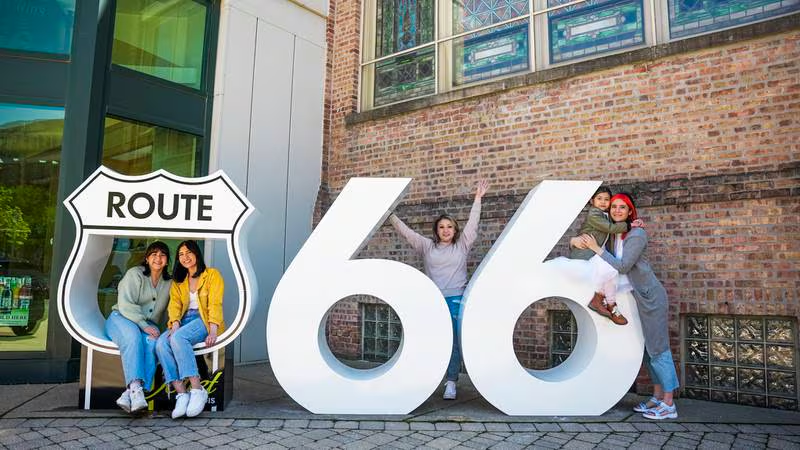
At the end of the first hundred miles, the Route 66 Association of Illinois Museum, 110 W. Howard St., Pontiac, invites you to step deep into the Mother Road’s soul. With vintage license plates, historical photographs, a classic VW bus featured in Disney’s “Cars,” and a towering Route 66 shield mural perfect for photos, this museum is a celebration of nostalgia, community, and the enduring allure of America’s most famous highway.